

Flat rates are easy to sell but hard to justify when actual usage varies a lot between clients. That’s why at Neobora we opted for a pricing model based on a usage multiplier.
The problem with flat rates
With a flat rate, the client who processes little subsidizes the one who processes a lot, or vice versa: the one who needs processing peaks ends up short on contracted capacity. Neither situation is healthy long-term. And in an industry where the same client can go from a 20 GB project to a 2 TB one from one month to the next, setting a single price in advance forces you to guess, not calculate.

Alternatives we ruled out
Before settling on the multiplier, we evaluated two common models in geospatial software. The first, per-user-seat pricing, has no relation to the volume of data processed: a single operator can launch a 5 GB or a 5 TB project paying exactly the same. The second, a prepaid credit system, shifts onto the client the burden of estimating their consumption months in advance — and penalizes both falling short and buying too much.
Neither solved the underlying problem: that the cost to the client and the real cost of processing their data didn’t have to match.
How the multiplier works
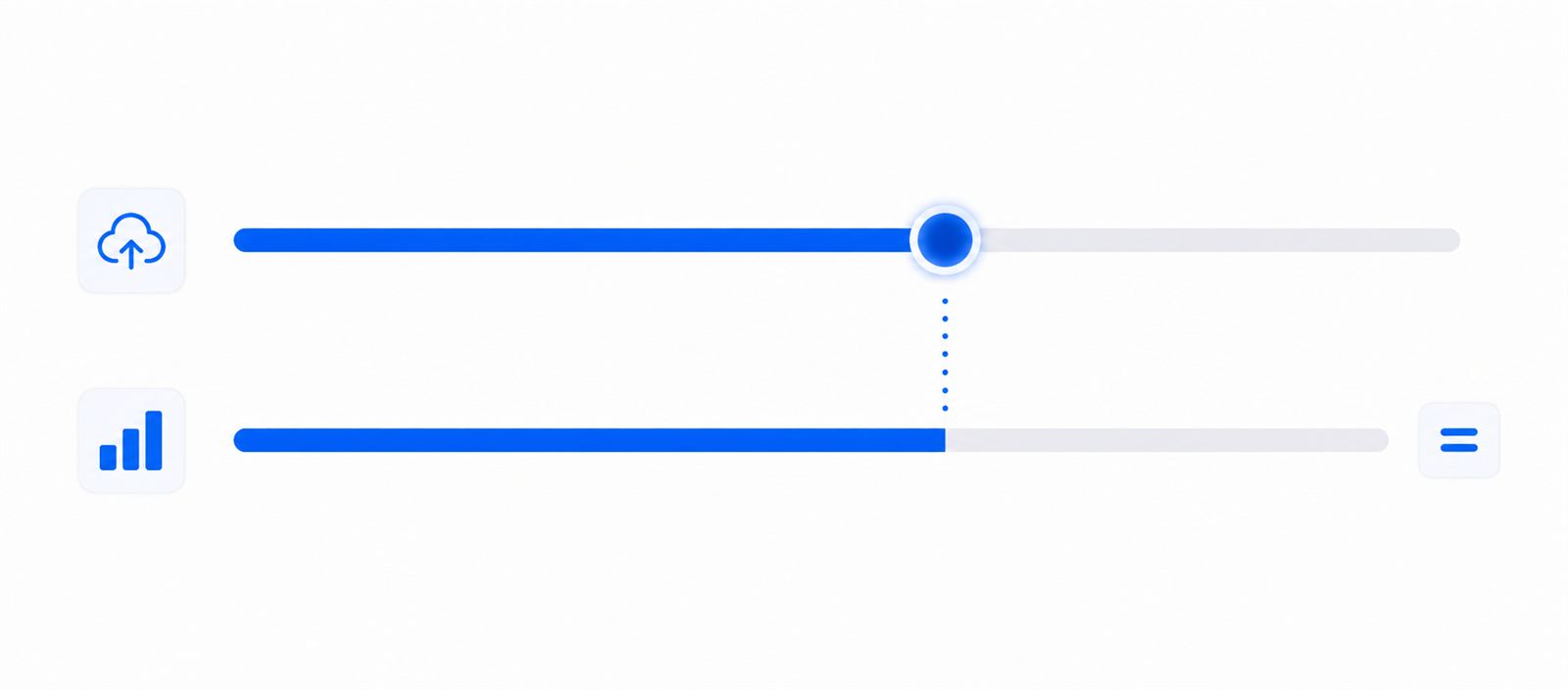
The client pays in direct proportion to the volume of data processed, with a fixed multiplier known in advance. There are no hidden tiers or end-of-month surprises: the cost scales exactly as usage scales. The multiplier applies to the volume of classified data (GB of point cloud, raster or vector), not to users, open projects or platform connection time.
A price the client can calculate themselves is more convincing than any sales pitch.
How much usage you contract, and for how long
The multiplier isn’t bought on its own: it comes inside a plan, and that’s where the model’s second principle appears. The larger the amount of usage contracted, the cheaper each unit becomes. Lite includes a ×1 multiplier; Prime costs the equivalent of three Lites but gives ×5 of usage; and Business, the equivalent of seven, gives ×15. In other words: moving up a plan not only fits more work, it also makes each processed gigabyte cheaper than in the previous plan.
Then there’s the term. A one-year commitment is billed at a lower price than month-to-month contracting —around 17 % below—, because it lets us plan processing capacity in advance. Anyone who prefers not to commit can contract monthly and change or cancel whenever they want, paying a little more for that flexibility.
And committing for a year doesn’t mean being locked into a small plan. If usage falls short mid-contract, you can upgrade to the higher plan at any time and whatever is left unused from the previous plan is credited: you don’t lose usage already paid for and there’s no penalty for growing. The commitment is to the term, not to the size.
A real-numbers example
For the formula to stop being abstract, here’s how it applies to three common project sizes:
In all three cases, the client applies the same published multiplier to their own data volume before requesting a quote — the final invoice doesn’t depend on which sales rep handled the account.
Transparency as a sales argument
When a client can estimate their invoice before signing, the sales conversation changes: it stops revolving around discounts and starts revolving around volume and real project planning. Procurement teams at public administrations and large companies, in particular, greatly value being able to internally justify a cost calculated with a public formula versus a closed budget with no breakdown.
What happens with work peaks
The most common objection to the usage-based model is the lack of predictability during a specific peak (a large flight campaign, an urgent project). In practice we solve this the other way around: since the multiplier is fixed and linear, a volume spike doesn’t trigger any hidden marginal cost — the client pays proportionally more that month, and proportionally less the following month if volume drops. And if the peak stops being occasional and becomes the new normal, upgrading the plan is immediate and the unused portion of the previous one is credited.
Conclusion
The usage multiplier isn’t just a pricing decision: it’s a way of aligning what the client pays with what they actually consume, and of turning that transparency into a sales argument in itself.
Ready to get started? Create your free account in under a minute, no card and no commitment.