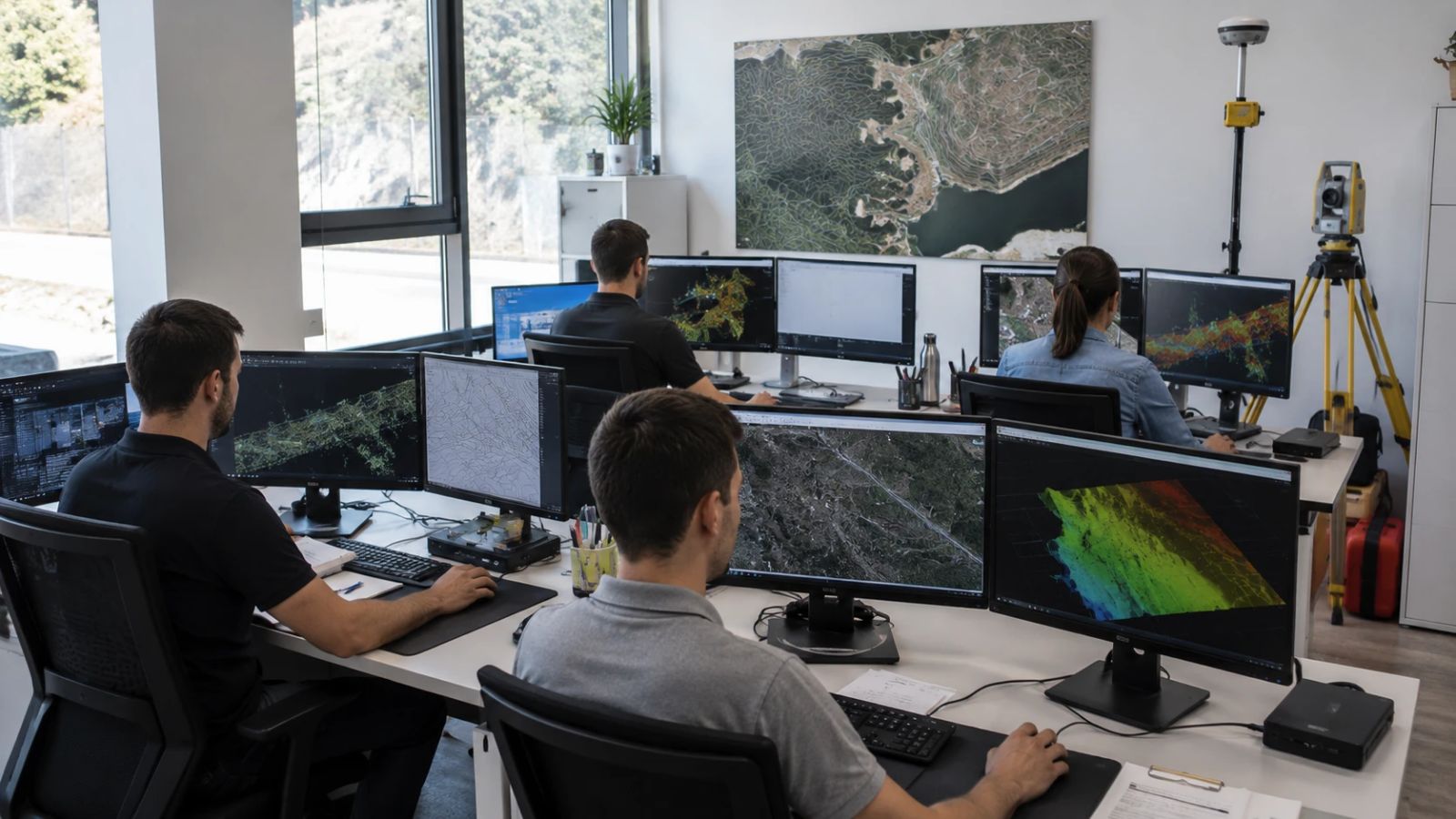
A surveying or photogrammetry firm grows in a very specific way: more projects come in than the current team can process, and the default response is usually one of two — hire more people, or outsource processing to a third party. Neither scales well.
The ceiling of hiring more people
Growing the team to absorb workload peaks has a fundamental problem: the peak doesn't last all year. Hiring for the busiest month leaves the team oversized the rest of the time, and the learning curve of a new photo-interpretation operator is not immediate — it shows in the quality of the first projects, not just in the cost.
The limits of outsourcing processing
The usual alternative, sending processing out during peaks, solves capacity but opens other problems: quality control is done on an already-closed deliverable instead of on the process, the project margin shrinks due to the subcontracting cost, and the end client rarely knows —nor needs to know— that part of the work has been outsourced.
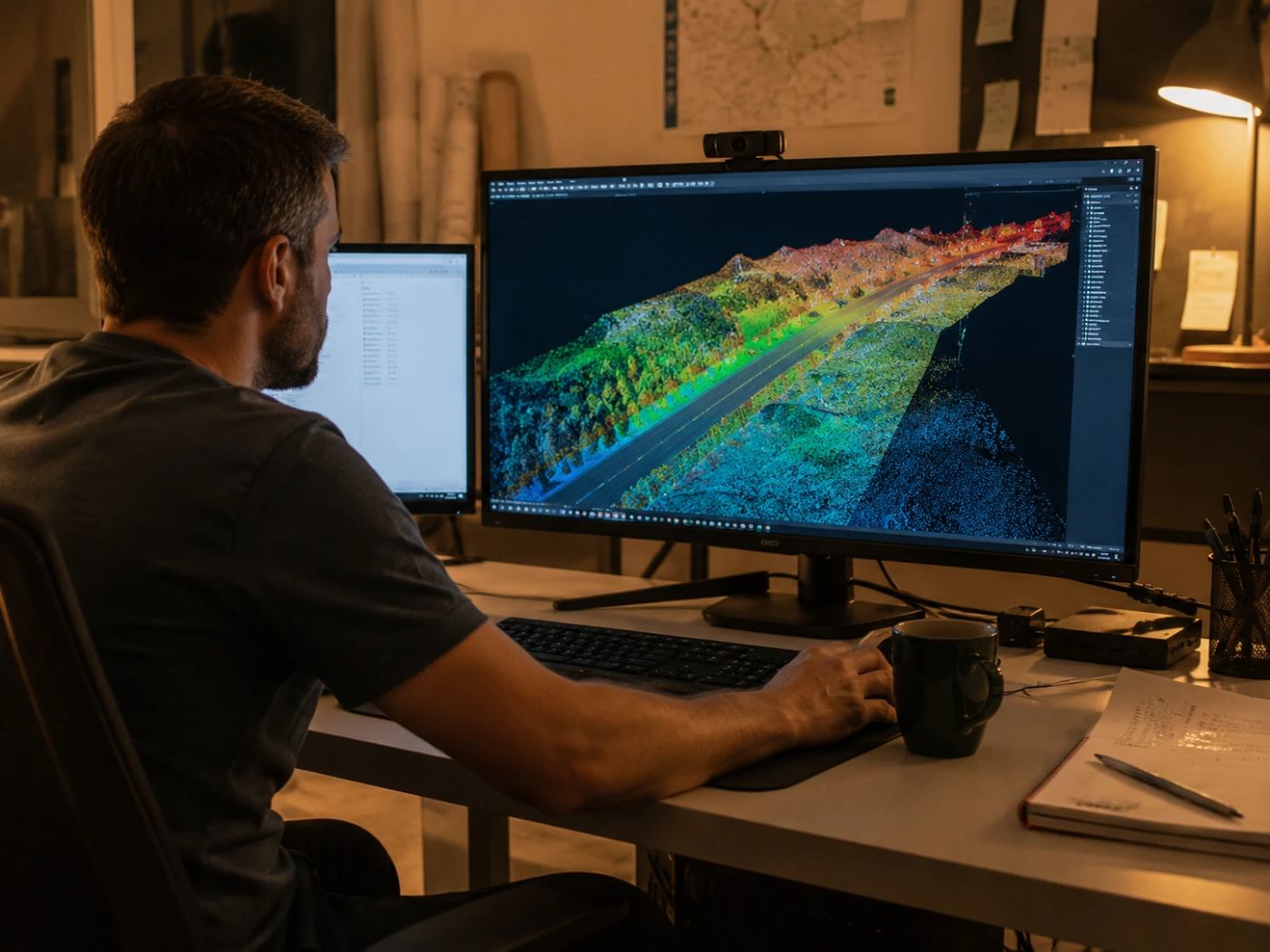
A surveying firm's limit is almost never how much it can fly. It's how much it can process without losing margin or quality.
Automating the repetitive part
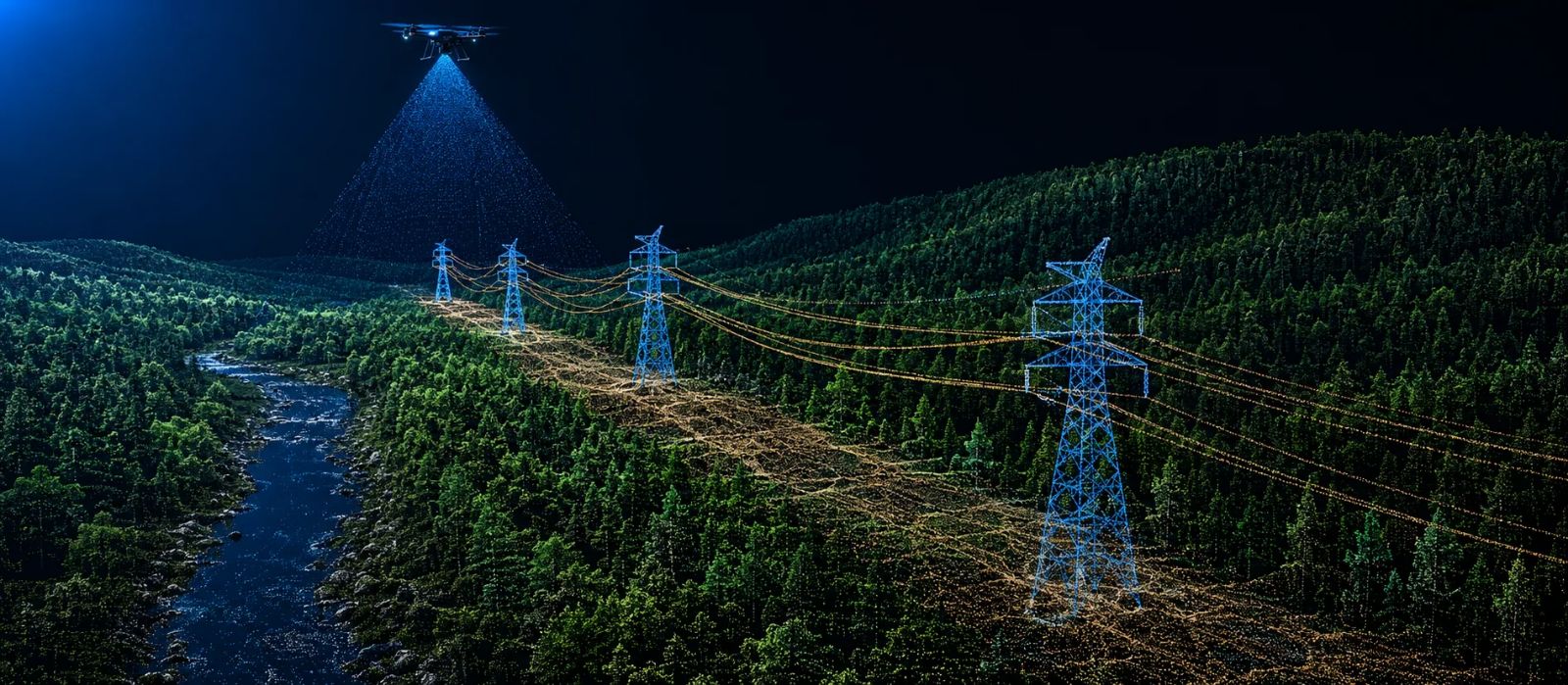
Point-cloud classification, digital elevation model generation and 3D vector extraction are, in most projects, repetitive work before reaching the part that truly requires engineering judgement: validating what's doubtful, resolving edge cases and delivering with assurance. Automating the first part does not replace the operator — it frees their time for the second.
This is exactly the division of labour a platform like Neobora is designed for: AI classification of LiDAR clouds, elevation model generation and vector extraction run in the cloud, and the high-productivity editor focuses the operator on validating what's doubtful and resolving edge cases. Unlike outsourcing, quality control is done on the process itself and not on an already-closed deliverable, so the work —and the responsibility for it— never leaves the firm.
Absorbing project peaks without oversizing the team
With processing in the cloud, a month with triple the projects does not require triple the operators or seat licences: it requires more compute and storage capacity during that specific month, which is released as soon as the peak passes. The human team stays stable; what varies is the volume of data the platform absorbs behind the scenes.
With Neobora that compute and storage are contracted per use and deployed in the cloud (or on-premise, if the firm needs to keep the data in-house), so a project peak is absorbed without buying seat licences or standing up your own infrastructure. And since the workflow doesn't require setting up a complex GIS environment, the team that already knows the project can operate on it without depending on a specialist profile for each task.
What happens to the margin
This is where paying by usage volume instead of by fixed seat or outsourced project fits in: the processing cost rises and falls with the firm's own workload, not with how many people are on the payroll. A slow month doesn't pay for idle capacity, and a strong month doesn't trigger a fixed cost already committed in advance — the same logic we explain in detail in the article on our usage-multiplier pricing model.
Conclusion
Scaling production doesn't have to mean scaling headcount or ceding margin to a subcontractor. Automating repetitive processing on a platform like Neobora —cloud classification, quality control over the process, and paying only for the volume actually moved each month— lets a surveying or photogrammetry firm take on more projects without giving up the quality control that carries its name.